
MTR is a military planning and execution support computer aided expert system.
It facilitates the whole military planning and decision making process on computers, and gives invaluable help to the military leaders during the execution of the prepared plans. Moreover it can be used to help the planning of CAX exercise scenarios and teaching of the military planning process as well.
MTR provides an advanced environment for practicing the elaboration and execution process of an operation plan. The military planning and decision making process can be carried out with the support of a computer aided expert system. It gives the possibility to plan and try out disaster relief and crisis management plans as well.
The operational plans and the related documents can be created on an integrated network of workstations using team-work technologies.
MTR helps to get practical experience on the modernization of the current planning methods. It takes the preliminary steps in changing over to a digital command and control system.
MTR’s application benefits are among others as follows:
- Reduces the time consumption necessary for making operational plans
- Improves the basis for decisions, provide the means for the essential checking of adequacy
- Modernizes the presentation of information
- Improves the exchange and handling of information among staff members
- Improves and extends the use of computer assisted exercises (CAX).
- Provides efficient support for tactical command and control, supplies all the required information of a command and control system during operation plan execution, distributes and evaluates the correlated plans and data.

MTR supports the steps of the military decision making process
- Mission analysis
- Intelligence preparation of the battlefield
- Courses of Actions development
- Phase transition handling
- War-gaming
- Assessment, decision support matrix handling
- Synchronization matrix development
with the following features:
- Supports the special map drawing functions of the operational planning and the digital command and control by
- creating layers
- drawing coordinate labels, inserting coordinate data into texts
- linking texts, multimedia data to map symbols or terrain features
- Manages tandem peace and war time force structures
- User-customized and comparison tables can be defined freely
- Provides flexible data mining, surplus/deficiency tracking possibilities
- Has a semi-automatic report generation tool based on user defined templates
- Helps the data security based on user identification and data logging
- Courses of actions (COA) versions can be defined and handled along with operation phase layers
- COA-s can be assessed with the help of decision support matrices
- Decision points can be defined
- assessments can be made on the possibilities of the planned operations
- Phases can be arranged into a slide show
- War-gaming can be carried out based on the defined COA-s and operation phase layers
MTR provides teamwork support
- Information handling is linked to the structure of the planning staff
- Data representation, directory structure, document handling
- Information exchange and replication mechanism
- Accessibility rights

- Managing the staff work schedule table
- Elaboration based on user defined templates
- Task review, schedule checking
- Definable alarm signals
- Distributed planning

MTR’s modelling includes several features such as:
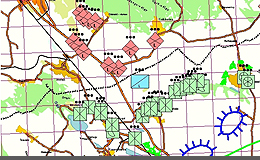
- The current or planned operational situation is drawn on digital or scanned map or on satellite image using standard APP-6A symbology. Scenarios can contain any desired formations, weapon’s capability and force deployment in the battlefield for 16 different participants, including the own and the hostile forces.
- Representation of the meteorological factors: light condition, wind, precipitation, temperature, cloud-base.
- Digital terrain database: mixed raster and vector representation, usage of different standards (NIMA-DFAD/DTED, VMAP, DXF, SHP)
- Tactical database with almost 2000 objects: armament, equipment, personnel and vehicles for NATO, FSU and other countries.
- All objects have a number of attributes and parameters.
- Force structure, order of battle handling (tandem peace-time and war-time structure, dislocation, readiness class and time, manpower, equipment, stock data, typical structures)
- Data mining, surplus/deficiencies data.
- Staff work, decision making support: handling and tracking of commanders’ timetable, handling of documents and decision support matrices.
- Handling of the planning and execution phases, layers: courses of actions, decision points, assessments of the possibilities of the planned operations, handling phase slideshows.
- Document templates and report generation support.
- Order preparation, communication and documentation
Interoperability with other systems

MTR assessment functions
- Terrain assessment functions
- Cross Country Movement (CCM) overlay
- Trafficability on soil
- Trafficability maps
- Various visibility assessments
- Coverage
- Trip time
- Fire position selection
- Fire system analysis
- Terrain section
- Relief evaluation
- Soil type analysis
- Air defence assessment
- Permeability estimation
- Radar reconnaissance possibilities
- Cross Country Movement (CCM) overlay
- Tactical assessment functions
- Force ratio calculations
- Maneuvering capability analysis
- Penetration capability analysis
- Fire system analysis
- Field artillery fire planning, defence analysis
- Attrition estimation
- Logistical assessment functions
- Calculation of logistical capabilities
- Supply calculations
- Marching and transportation planning
- POL and ammunition refilling capability analysis
- Air force / air defence calculations
- Radar reconnaissance horizontal view, radar map
- Radar reconnaissance view vertical section
- Air defence missile application zone, vertical section
- Air-to-air and air-to-ground missile application area
- Radar reconnaissance horizontal view, radar map
Other features
- Easy customization: user defined echelons and force structures, user defined workstation assignment, quick modification of the digitized terrain and map database.
- User-friendly, menu-driven, windows-oriented user interface.
- Case sensitive help
- Multilinguality, languages can be used simultaneously.
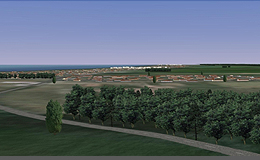
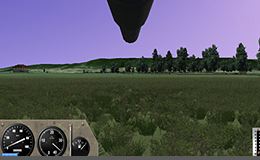
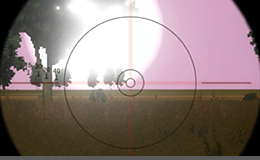
- 3D /Stealth visualisation of the terrain and the equipment.
- Data security: user identification, logging of access data.
- Connection to other systems.
- Easy archive handling.